
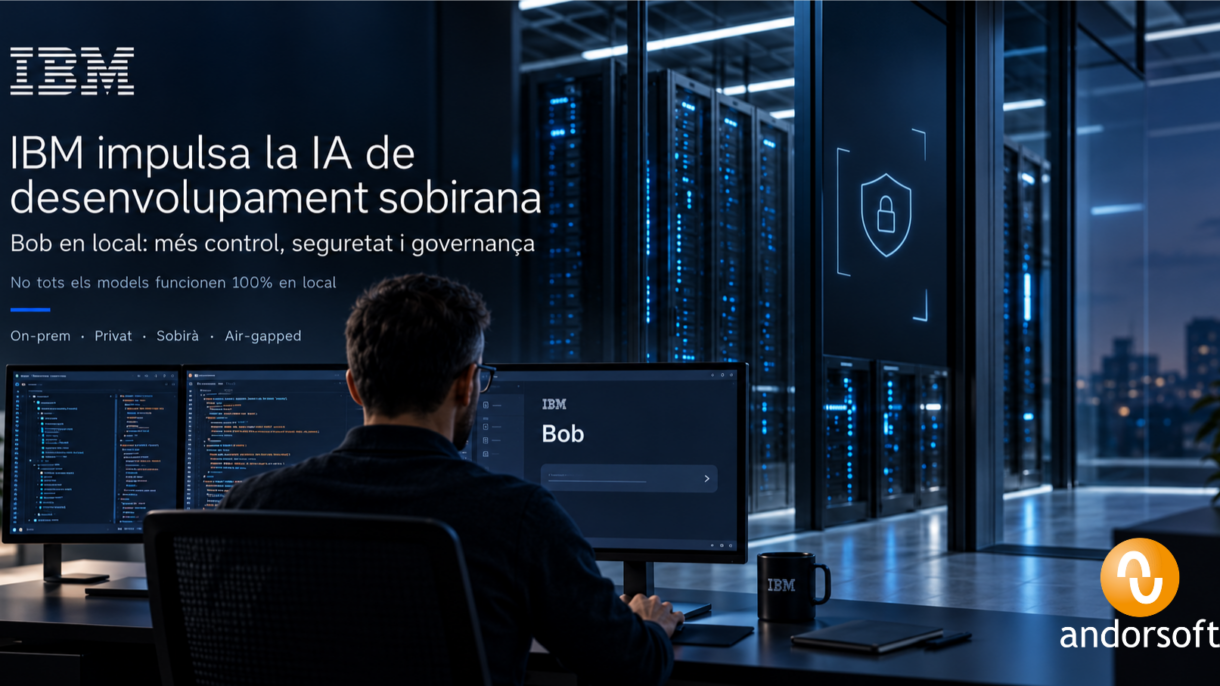

IBM is expanding the deployment options of Bob, its AI assistant for software development, allowing it to be run within the company’s own infrastructure, including private, sovereign, and even air-gapped environments, without external connection.
The goal is clear: to allow organizations with high requirements for security, governance, or data residency to apply AI to development while maintaining the code and its context within their own environment. Bob can analyze applications, plan modifications, apply changes, and verify the result.
However, there is an important nuance: the level of sovereignty also depends on the AI model used. IBM indicates that some models can be run entirely locally, while other commercial models still require hybrid operation and external processing.
For IT managers, this reinforces an increasingly relevant trend: the adoption of business AI no longer depends solely on which model is more powerful, but also on where it is executed, where the data travels, and who maintains control over it.
More control. More governance. More capacity to adapt AI to the real requirements of each organization.